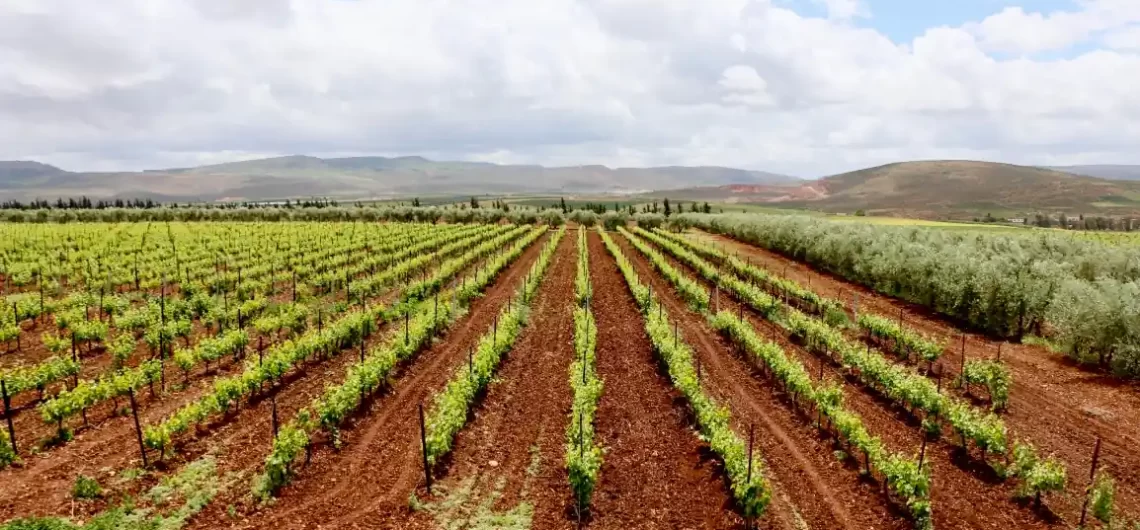
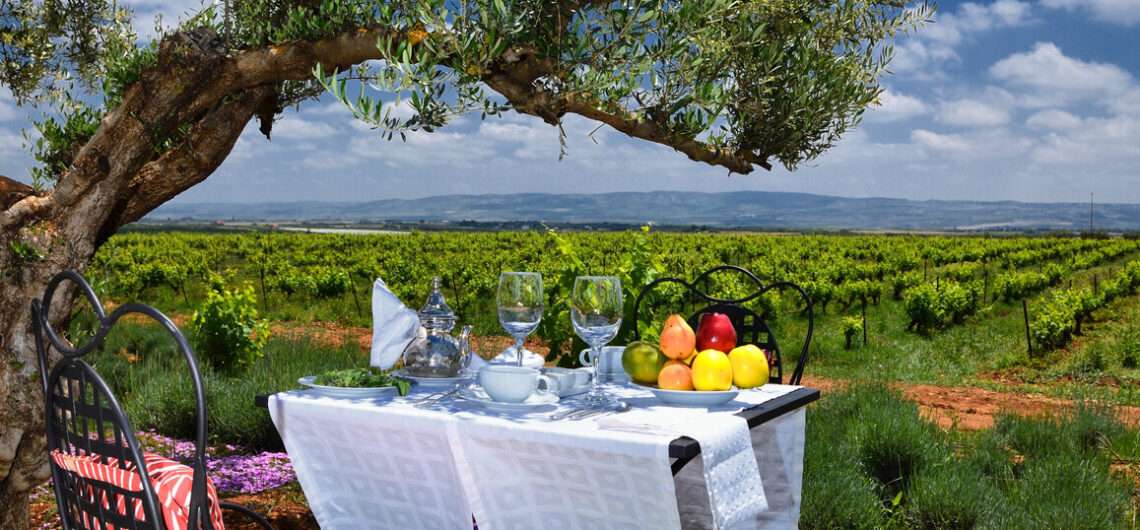
Discover the Val d’Argan Winery The Val d’Argan winery is one of Morocco’s most surprising and rewarding travel experiences. Located in the peaceful countryside of the Atlantic region, this vineyard offers a rare mix of nature, culture, and organic winemaking. Because wine estates are uncommon in Morocco, visiting the Val d’Argan winery feels both special and memorable. Whether you enjoy wine or simply love discovering new places, this experience welcomes everyone. In addition, the calm setting makes it a perfect escape from busy cities. Visiting this winery will be the opportunity to know more about Moroccan viticulture. What Makes the Val d’Argan Winery Unique? The Val d’Argan winery was founded in 1994 by French winemaker Charles Mélia. He chose this region for its mild climate, Atlantic winds, and fertile soil. As a result, the vineyard is ideal for growing Rhône grape varieties such as Syrah, Grenache, and Viognier. More importantly, Val d’Argan follows certified organic farming standards. The vines grow alongside argan trees and olive groves, creating a landscape that feels natural and balanced. Because of this approach, the wines reflect both the land and the climate in an authentic way. Lonely Planet – Domaine du Val d’Argan Wine Tasting at Val d’Argan Winery A visit to the Val d’Argan winery usually includes a guided wine tasting. First, you learn about the winemaking process. Then, you taste several wines produced on the estate. You can expect: Fresh white wines Elegant rosé wines Full-bodied red wines Seasonal special selections Meanwhile, staff explain each wine in a clear and friendly way. Because of this, both beginners and experienced wine lovers feel comfortable and included. A Scenic Lunch Among the Vines In addition to tastings, the Val d’Argan winery offers lunch experiences with vineyard views. Meals often combine Moroccan and Mediterranean flavors, paired
Discover the Val d’Argan Winery
The Val d’Argan winery is one of Morocco’s most surprising and rewarding travel experiences. Located in the peaceful countryside of the Atlantic region, this vineyard offers a rare mix of nature, culture, and organic winemaking. Because wine estates are uncommon in Morocco, visiting the Val d’Argan winery feels both special and memorable.
Whether you enjoy wine or simply love discovering new places, this experience welcomes everyone. In addition, the calm setting makes it a perfect escape from busy cities. Visiting this winery will be the opportunity to know more about Moroccan viticulture.
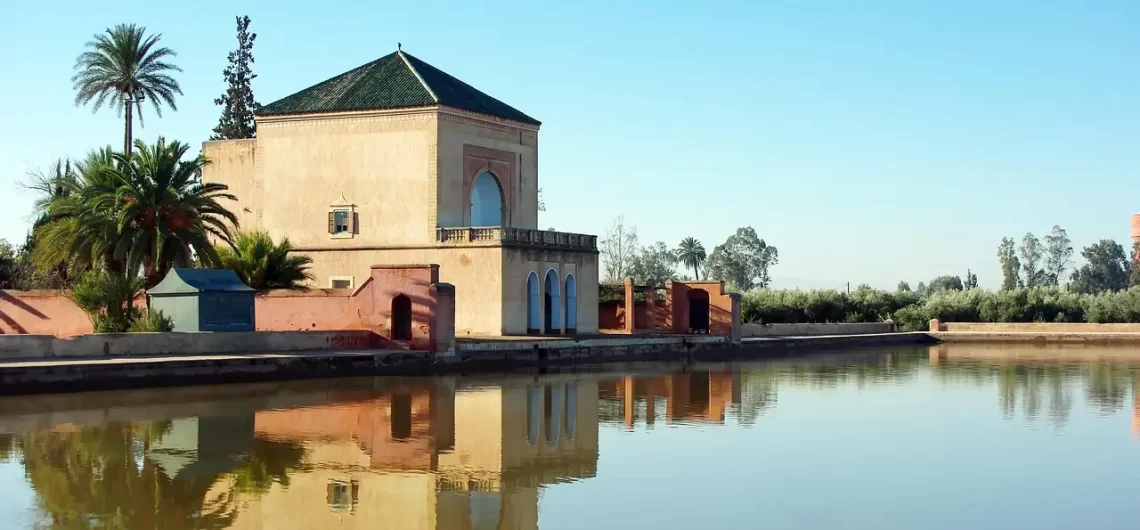
Gardens of Marrakech: A sensory journey through Morocco’s green sanctuaries Few travel experiences stay with you quite like sharing lunch beneath the shade of an ancient pistachio tree in Morocco’s Atlas Mountains. The gardens of Marrakech and the Atlas offer the flavors of slow-cooked local dishes and the scent of wild herbs. Furthermore, the calm of a garden surrounded by dramatic peaks creates memories that linger long after the journey ends. The Gardens of Marrakech and the Atlas invite travelers to slow down and connect with Morocco through its green spaces. From elegant city gardens to terraced mountain landscapes, this journey to the Gardens of Marrakech and the Atlas reveals how nature, culture, and human creativity are deeply intertwined. As winter gently shifts toward spring, Marrakech and the surrounding valleys are at their most inviting. Citrus trees begin to blossom, roses scent the air, and the snow-capped Atlas Mountains form a breathtaking backdrop. It is an ideal season to explore Morocco’s remarkable garden heritage. The Gardens of Marrakech and the Atlas – where culture meets cultivation Morocco is known for its contrasts. Ancient medinas sit alongside modern boulevards, while arid plains give way to fertile oases. These contrasts are beautifully expressed in the Gardens of Marrakech and the Atlas. Here, Islamic design principles, Berber ingenuity, and European artistic influences come together. Experienced through the gardens of Marrakech and the Atlas, gardens are not simply decorative spaces. In fact, they are places of rest, reflection, and survival. These spaces have been shaped by centuries of knowledge about water, climate, and community life. Marrakech – the green soul of the Red City Behind Marrakech’s ochre walls and lively streets lies a quieter world of gardens. These gardens have offered shade and serenity for generations. Jardin Majorelle – Marrakech famous garden The Jardin
Gardens of Marrakech: A sensory journey through Morocco’s green sanctuaries
Few travel experiences stay with you quite like sharing lunch beneath the shade of an ancient pistachio tree in Morocco’s Atlas Mountains. The gardens of Marrakech and the Atlas offer the flavors of slow-cooked local dishes and the scent of wild herbs. Furthermore, the calm of a garden surrounded by dramatic peaks creates memories that linger long after the journey ends.
The Gardens of Marrakech and the Atlas invite travelers to slow down and connect with Morocco through its green spaces. From elegant city gardens to terraced mountain landscapes, this journey to the Gardens of Marrakech and the Atlas reveals how nature, culture, and human creativity are deeply intertwined.
As winter gently shifts toward spring, Marrakech and the surrounding valleys are at their most inviting. Citrus trees begin to blossom, roses scent the air, and the snow-capped Atlas Mountains form a breathtaking backdrop. It is an ideal season to explore Morocco’s remarkable garden heritage.
At Colored Morocco Tours & Travel, our passion lies in crafting immersive and enriching travel experiences that go beyond the ordinary. While we proudly operate as a premier DMC based in Marrakech, we also know that Morocco is too vast and too rich to be explored through just one lens. That’s why we’re excited to introduce you to our sister company — Morocco Quest DMC. It is a boutique destination management company. It is dedicated to delivering deeply authentic and tailored journeys across the Kingdom. This is part of the Morocco Quest DMC family. Morocco Quest DMC shares the same values that define our work: authenticity, attention to detail, and the art of creating memorable human connections. Whether you're exploring the golden dunes of the Sahara, the centuries-old medinas of Fes, or the winding coastal roads to Essaouira, Morocco Quest brings the same commitment to excellence. It also provides local expertise. This expertise clearly showcases the ethos of Morocco Quest's dedication. What sets them apart? A sharp focus on authenticity — real people, real places, real Morocco. Their team dives deep into cultural nuances to design experiences that are meaningful. Furthermore, they contribute to the communities you visit. This forms part of the Morocco Quest DMC distinction that emphasizes genuine Moroccan experiences. Think Berber bread-baking lessons in the High Atlas, tea with artisans in the medina, or stargazing in remote desert camps — always with warmth, care, and comfort. If you're a traveler or an industry partner looking for tailor-made group journeys, premium FIT programs, or creative MICE solutions, morocco-quest.com is your go-to. As part of Morocco Quest DMC, you can expect professionalism, creativity, and Moroccan hospitality. This is at the same level you’ve come to know through Colored Morocco. Ready to go further and deeper? Discover Morocco with Morocco
At Colored Morocco Tours & Travel, our passion lies in crafting immersive and enriching travel experiences that go beyond the ordinary. While we proudly operate as a premier DMC based in Marrakech, we also know that Morocco is too vast and too rich to be explored through just one lens. That’s why we’re excited to introduce you to our sister company — Morocco Quest DMC. It is a boutique destination management company. It is dedicated to delivering deeply authentic and tailored journeys across the Kingdom. This is part of the Morocco Quest DMC family.
Are you and your partner dreaming of a romantic escape that transcends the ordinary? Look no further than Morocco, where enchanting landscapes, exotic culture, and intimate experiences await. From the bustling medinas to the tranquil desert dunes, Morocco offers a plethora of options for couples seeking unforgettable moments together. Get ready to ignite the flames of love with our handpicked selection of the most romantic getaways in Morocco. Marrakech: A Love Story Amidst Ancient Palaces and Gardens Step into the heart of Morocco's romance as you explore the magical city of Marrakech. Lose yourselves in the labyrinthine alleys of the medina, hand in hand, and discover hidden gems around every corner. Visit the splendid Bahia Palace, known for its mesmerizing architecture and lush gardens, or share a serene moment at the enchanting Majorelle Garden. you can book now our Marrakech intimate tour here Chefchaouen: Painting the Town Blue with Love Nestled amidst the Rif Mountains, the blue-washed town of Chefchaouen , exudes a peaceful ambiance perfect for couples seeking tranquility. Stroll through the azure streets, and let the charm of this picturesque town ignite your romance. Don't miss the opportunity to savor local Moroccan delicacies at intimate rooftop restaurants overlooking the blue city. you can Book now our chefchaoun day trip from fez by clicking here or Book our chefchaoun day trip from Rabat by clicking here Essaouira: Windswept Romance by the Atlantic For couples with a penchant for coastal beauty, Essaouira is a must-visit destination. Embrace the Atlantic breeze as you walk hand in hand along the sandy beaches. The city's historic charm, with its fortified walls and vibrant medina, adds a touch of magic to your romantic getaway. you can book now our Essaouira day trip from Marrakech by clicking here Sahara Desert: Love Under a Million Stars
Are you and your partner dreaming of a romantic escape that transcends the ordinary? Look no further than Morocco, where enchanting landscapes, exotic culture, and intimate experiences await. From the bustling medinas to the tranquil desert dunes, Morocco offers a plethora of options for couples seeking unforgettable moments together. Get ready to ignite the flames of love with our handpicked selection of the most romantic getaways in Morocco.
Yennayer is the New Year’s Day of the agrarian calendar used since antiquity by the Berbers throughout North Africa. They celebrate it from January 12 to 14 of each year, as the start of the Julian calendar. It is shifted of 13 days compared to the Gregorian calendar, and starts on the 14th of each year. Probably as a result of an error of the first cultural associations that advocated the return to this traditional holiday threatened with extinction, the opinion that the traditional date is January 12 is widespread, although the exact date is January 14. In some regions, They precede Yennayer with IMENSI N YENNAYER "Yennayer's dinner" on the eve of the Amazigh New Year. The participants meet and wait, through different events, for the coming of the new year. In France, the inventory of intangible cultural heritage registered Yennayer since 2020. Yennayer corresponds to the first day of the agrarian calendar used by the Berbers for several centuries. Yennayer also refers to the beginning of the Julian calendar, adopted in ancient Rome. The Berber Academy based its decision on the fact that the Berbers used to celebrate Yennayer every year, to declare it as the "Amazigh New Year". It is Ammar Negadi who put forward a Berber calendar, in 1980, based on a significant event in the history of the Amazigh people, an indisputable historical fact to make it the zero point of the calendar. His choice fell on the year 950 B.C. which corresponds to the date when the Berber king Sheshonq I was enthroned Pharaoh of Egypt and founded the XXIInd dynasty which ruled Egypt until the year 715 B.C. This Berber king had succeeded in unifying Egypt and then invaded the Kingdom of Israel. It is said that he seized the treasures of Solomon's
Yennayer is the New Year’s Day of the agrarian calendar used since antiquity by the Berbers throughout North Africa. They celebrate it from January 12 to 14 of each year, as the start of the Julian calendar. It is shifted of 13 days compared to the Gregorian calendar, and starts on the 14th of each year. Probably as a result of an error of the first cultural associations that advocated the return to this traditional holiday threatened with extinction, the opinion that the traditional date is January 12 is widespread, although the exact date is January 14.
The viticulture in Morocco and the planting of the first vineyards date back to the Phoenicians and the Roman colonisation. In ancient times, the major centre of wine production was concentrated around Volubilis. This region is part of the present-day city of Meknes. Morocco remains one of the last lands wild vines on earth. As early as antiquity, Pausanias the Periegete noted that the inhabitants of Lixus, a city founded by the Phoenicians on the right bank of the Loukkos wadi, consumed the fruit. Louis Levadoux indicates that 'The Berbers do not neglect this supplement.' Indeed, when autumn comes, the people of Guergour go high up into the forests of the Atlas. They pick the grapes from the trees to eat them fresh or dry them on racks. Click here, to book a place with us for a winery tasting tour. The ampelographer was able to find, in the valley of the Oued Titria, these lambrusques known as Aneb djalia. He notes that "Some of them bear a strong resemblance to the grape varieties cultivated by the Berbers". The first wines were produced around the second century BC during the installation of Phoenician and Greek trading posts. It was the Roman colonisation that developed viticulture in Morocco, allowing the wines of Mauritania to be presented on the patrician tables. This province corresponded to the northern part of present-day Morocco. It extended from the north, to Salé , to Volubilis in the south, and to the east in the Oued Laou river. The main cities were Volubilis, Tingis (Tangier), Lixus (Larache) and Tamuda (Tetouan). The Muslim conquest did not make the North African viticulture disappear but rather privileged the table grape. The Moroccan, Islamized, Berbers brought their varieties when they arrived in the Iberian Peninsula. One of these is still cultivated
The viticulture in Morocco and the planting of the first vineyards date back to the Phoenicians and the Roman colonisation. In ancient times, the major centre of wine production was concentrated around Volubilis. This region is part of the present-day city of Meknes.
Morocco remains one of the last lands wild vines on earth. As early as antiquity, Pausanias the Periegete noted that the inhabitants of Lixus, a city founded by the Phoenicians on the right bank of the Loukkos wadi, consumed the fruit. Louis Levadoux indicates that ‘The Berbers do not neglect this supplement.’ Indeed, when autumn comes, the people of Guergour go high up into the forests of the Atlas. They pick the grapes from the trees to eat them fresh or dry them on racks.
Click here, to book a place with us for a winery tasting tour.
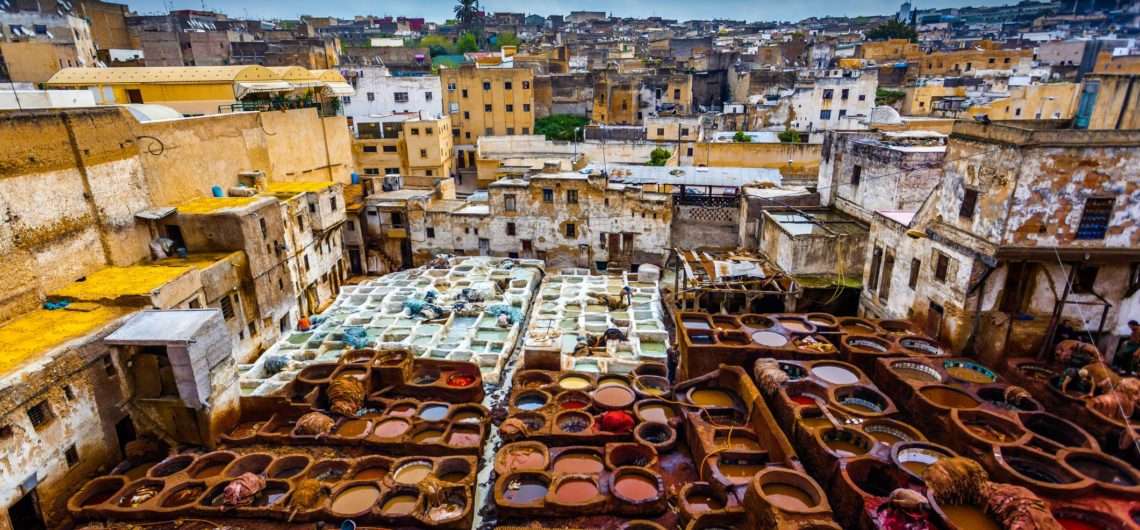
For a long time, we have dreamed of visiting Fez the cultural capital of Morocco, a city steeped in history. We join the small studio that we rented for a week, located a few steps from the medina. What a surprise when I got there! Our host welcomes us in a sumptuous palace, with walls decorated with many mosaics and other arabesques. The place deserves a renovation but, after all, the marks of time make also its charm. We even realize that this palace, called El Mokri, is on the list of monuments to visit on TripAdvisor! Get lost in the alleys of the medina of Fez We cheerfully set off to explore the medina ... which quickly puts our sense of direction to the test. The labyrinth seems specially designed to draw the visitor into its dead ends and even the GPS of our phones throw in the towel, unable to navigate. But the distress of some makes the happiness of others. The touts wait in strategic places and insist on showing us the right path! That day, we are a little disappointed by the medina of Fez and the quiet atmosphere of southern Morocco seems far away. The crowd jostles us, ten-year-old kids offer kif (cannabis), heavily loaded donkeys are beaten to advance ... We guess that the city does have charms, but still tired from our night bus ride, we had to discover them. We comeback as best we can, losing each other eight or ten times. The next day, well rested and determined to give the medina a second chance, we jump out from our beds at the first rays of sun. At 7:30 am, the alleys are almost deserted and the touts are still snoozing. Until 10 a.m., the old town of Fez thus
For a long time, we have dreamed of visiting Fez the cultural capital of Morocco, a city steeped in history. We join the small studio that we rented for a week, located a few steps from the medina. What a surprise when I got there! Our host welcomes us in a sumptuous palace, with walls decorated with many mosaics and other arabesques. The place deserves a renovation but, after all, the marks of time make also its charm. We even realize that this palace, called El Mokri, is on the list of monuments to visit on TripAdvisor!
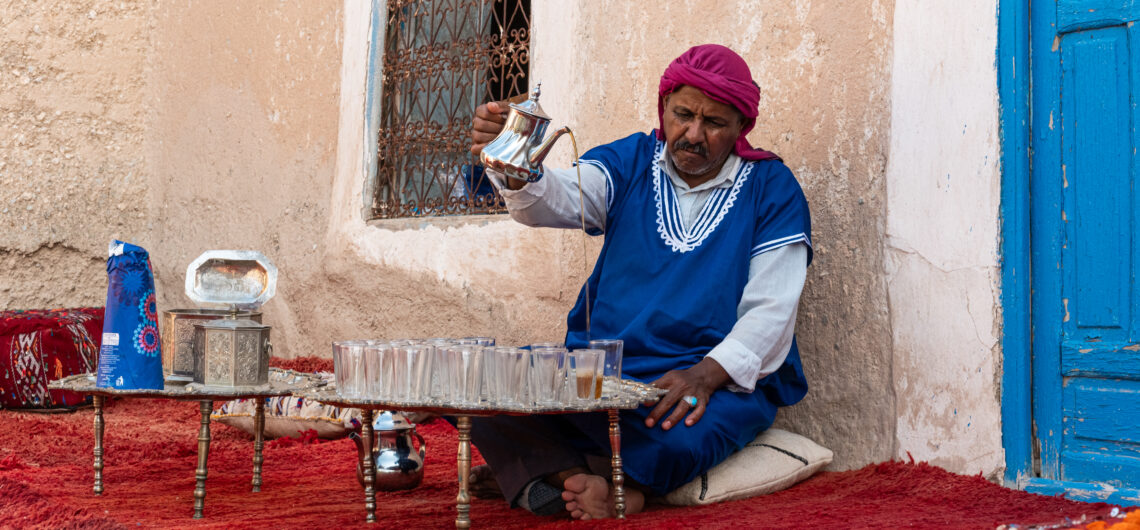
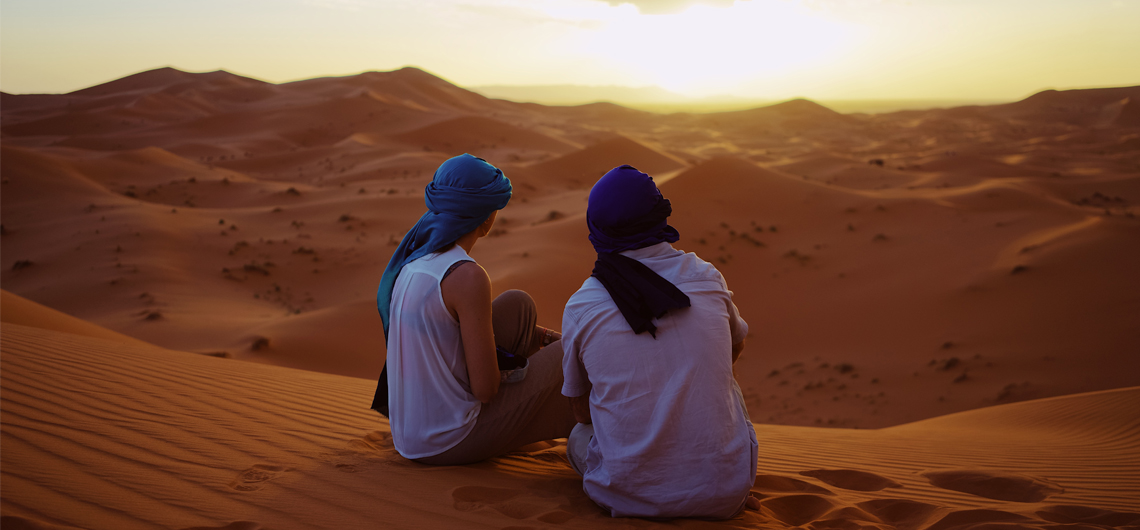
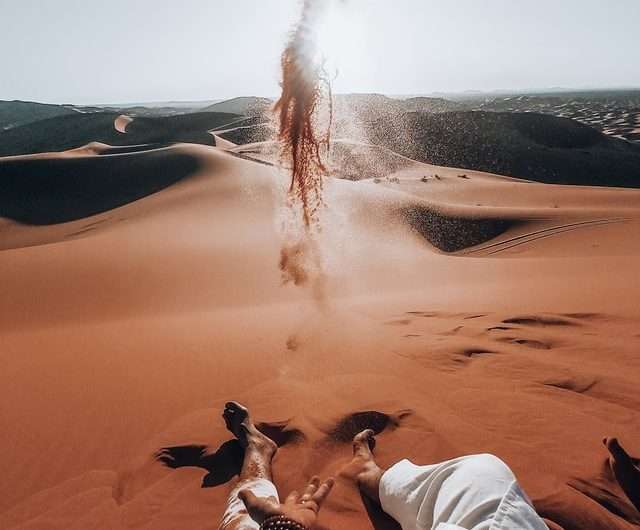
Merzouga is best known for its golden sand dunes along the majestic Erg Chebbi And it’s very unfortunate that most visitors don’t dwell on their exploration of this region, which is full of hidden treasures, Here is a list of Top 10 Activities to do in Merzouga: Camel treks and night under a nomadic tent in the desert Firstly,Immerse yourself in postcard decors as you cross the Erg Chebbi on the back of a camel. Spend the night in the company of nomads under the stars or in Berber bivouacs in the middle of an ocean of dunes. That's why it's number one on our list of Top 10 Activities to do in Merzouga. Take an Arenotherapy Cure (Sand Bath) You suffer from sore muscles or rheumatism? Let yourself be buried in the hot sand of the Merzouga desert renowned for its therapeutic properties. Claustrophobic refrain! Discover The Culture and Music of the Gnaoua The Khamlia village, located 7km from Merzouga and nicknamed "Black Town", reflects the indelible traces of trans-Saharan trade. Today the group "Pigeons des Sables" still play and sing the trance tunes of Saharan music, Gnaoua music. Walk through the Beautiful Oases of Merzouga The fertile oases of Merzouga appear like mirages in the desert. Sip a good mint tea in the company of oasian people who have managed to preserve their ancestral culture. Excursion to Tafilalet Palmeraie (Palm grove of Tafilalet) It is the largest palm grove in the world with its sublime plantation of date palms, but also its acacia forest where Oued Ziz and Oued Gheris meet. A moment of serenity not to be missed! Visit the Seasonal Lake of Dayet Srji In Spring only, some seasonal lakes reappear in these arid lands northwest of Merzouga. Especially,The Dayet Srji site which is a favorite
Merzouga is best known for its golden sand dunes along the majestic Erg Chebbi And it’s very unfortunate that most visitors don’t dwell on their exploration of this region, which is full of hidden treasures, Here is a list of Top 10 Activities to do in Merzouga:
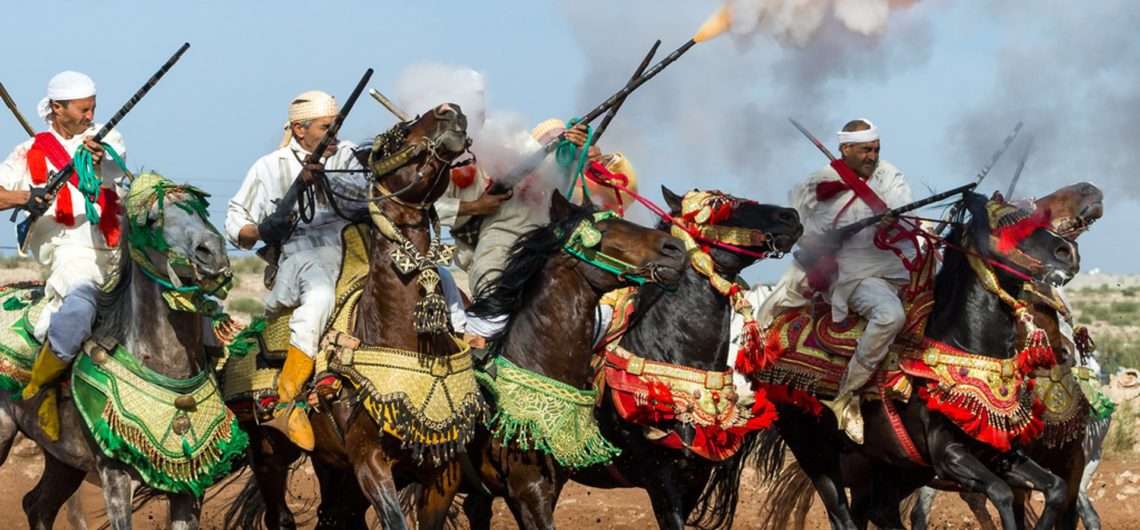
Magnificent, richly adorned Arab stallions gallop in unison, ridden by riders in flaming Djellabas armed with black powder rifles. At the end of a frantic gallop under the encouragement of the crowd, all the detonations of the rifles must then merge into a single clap of thunder. It's the Fantasia Tbourida in Morocco, and it's a breathtaking spectacle. And that's why you have to attend a fantasia tbourida in Morocco. The Fantasy of the Fantasia You can almost feel the ground vibrate under the hooves of the Arab thoroughbred horses charging at full gallop, encouraged by the screams of their riders. Then at the end of a frantic race, it is the apotheosis. Shots ring out as one big explosion whose power surprises us even though we were expecting it. The riders and their mounts are engulfed in a cloud of smoke for a brief moment, before reappearing perfectly aligned in front of the spectators as if to bow out, to a rain of applause. We just have time to recover from our emotions and admire the beauty of their accoutrements and the richness of their finery before they turn around and trot back. I can assure you that you'll enjoy this impressive spectacle. Fantasia Tbourida, a Moroccan tradition of yesteryear Fantasia or Tbourida in Arabic is a very old prestigious practice of Berber origin which aims to simulate a military assault by cavalry of yesteryear. It is a groups of ten riders belonging to the same tribe or ethnic community and commanded by a chief called M’qaddem. According to tradition, the harness and saddlery of horses must be embroidered with 18-carat gold thread and the armament must be made by hand. The long parade rifles with chiseled butts inlaid with mother-of-pearl and ivory are rimmed in silver. The riders
Magnificent, richly adorned Arab stallions gallop in unison, ridden by riders in flaming Djellabas armed with black powder rifles. At the end of a frantic gallop under the encouragement of the crowd, all the detonations of the rifles must then merge into a single clap of thunder. It’s the Fantasia Tbourida in Morocco, and it’s a breathtaking spectacle. And that’s why you have to attend a fantasia tbourida in Morocco.
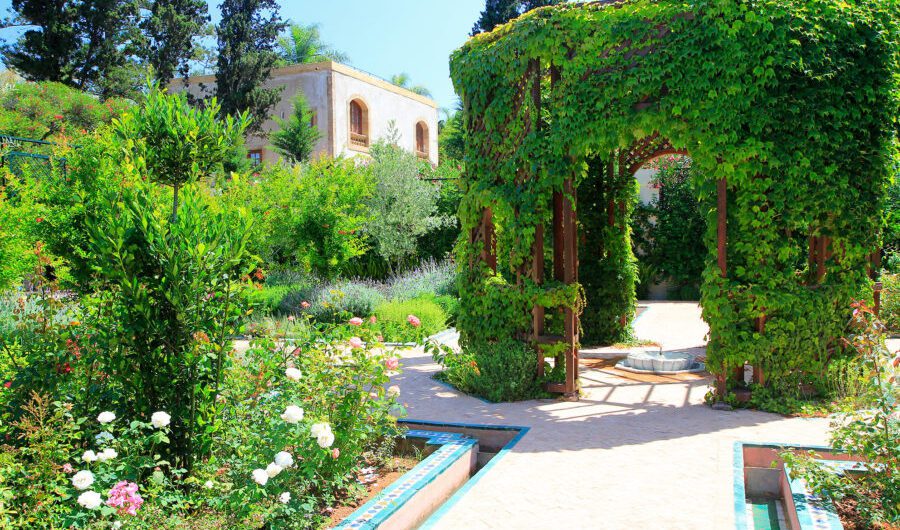
“The garden is a philosophy made visible”. It is a place that speaks to our souls. That connects us to what is deep in us, to nature and to our own nature. Every single garden is a place of spirituality. In addition to its cultural richness, Morocco is also the land of fauna and flora diversity, amongst which we find several hundred of stunning gardens, each one is more characteristic than the other. Read this article and discover a selection of 12 Morocco exotic gardens. RABAT GARDENS The Exotic Gardens The French horticultural engineer, Mr.Marcel François, created the Exotic Gardens of Rabat in the early 1950s and he opened them to the public ten years later. Mr. Marcel presented the gardens in three zones: a reception zone, comprising a playground and picnic area; a horticultural production area; and finally, by far the most impressive, the gardens area, a garden-nature, a garden-culture and an educational garden with a vivarium, an aquarium and a menagerie. Visitors hail these Exotic Gardens for their beauty and their diversity, beyond their plantations and their varied paths, surprised by the creativity and plasticity of the compositions, the meticulous perfection and the spirit of rigor of their layouts, the realism of the atmospheres evoked where nothing was left to chance (landscapes, biotope, climate…) with infinite possibilities of interpretation. As such, if the Gardens-natures reconstituted the forests of distant countries or regions (such as the Congo, the Antilles, Peru, China, Japan or Polynesia, etc.), the Gardens-cultures for their part translated the knowledge men. No wonder this garden is one of Morocco exotic gardens! The Botanical Testing Garden Another Morocco exotic garden is the Botanical Testing Garden in Rabat. It is a seventeen-hectare botanical garden located in the Agdal district of Rabat, centered on Avenue de la Victoire, with
“The garden is a philosophy made visible”. It is a place that speaks to our souls. That connects us to what is deep in us, to nature and to our own nature. Every single garden is a place of spirituality. In addition to its cultural richness, Morocco is also the land of fauna and flora diversity, amongst which we find several hundred of stunning gardens, each one is more characteristic than the other. Read this article and discover a selection of 12 Morocco exotic gardens.